
Space Squash
Space Squash is a VR squash simulator developed for the Oculus platform. The game immerses the player in the role of a cyber squash professional aboard a spaceship under attack by alien adversaries. The player must utilise their squash skills to protect the vessel. The gameplay unfolds in the engine room, where enemies spawn in waves behind the player and attempt to steal energy from the crystal core powering the spaceship. The game’s objective is to eliminate the enemies using the ball and racket before they drain the core’s energy entirely.
Objective and Responsibilities
As the gameplay experience designer for Space Squash, this practice-based research project aims to investigate how to ensure that the VR simulation of squash closely mirrors its real-life counterpart and how to implement surreal play rules to compensate for VR limitations. Moreover, the game is designed to offer clear affordances and feedback while meeting usability, unambiguity, and prompt response requirements, thus creating a convincing SoE for users. Consequently, my responsibility is to demonstrate how Simulation and SoE theories can be applied to hand-object UX design, resulting in intuitive and enjoyable gameplay experiences. Additionally, by integrating a realistic squash component, Space Squash has the potential to serve as a training tool, enabling players to cultivate their racket-ball-related skills within our simulated environment (Gee, 2003). This approach addresses the Learning and Skill Development aspect of simulation within the game.
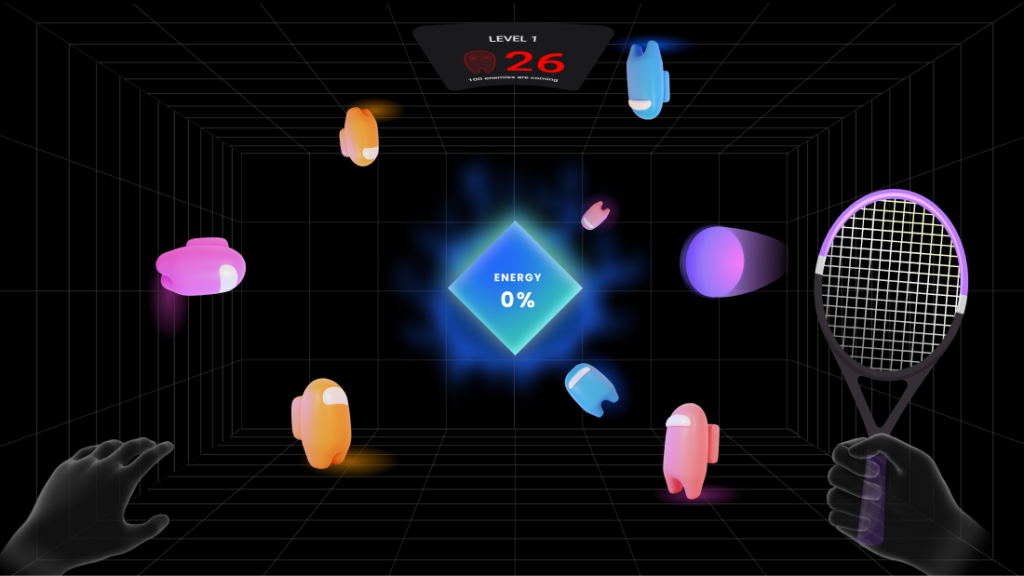
Figure 1, Core mechanism design draft.
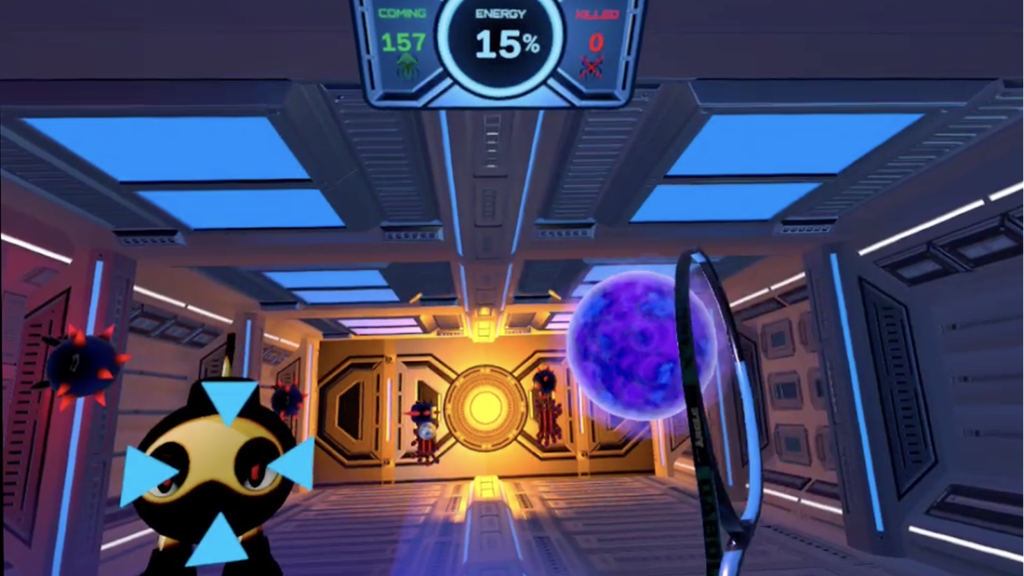
Figure 2, Gameplay scene final effect.
Designing Core Mechanism
The primary mechanic involves using a racket and ball to strike enemies. The core object interaction tasks of Space Squash can be distilled into the following fundamental elements:
· Serving the ball
· Hitting a target with the ball
· Catching the ball
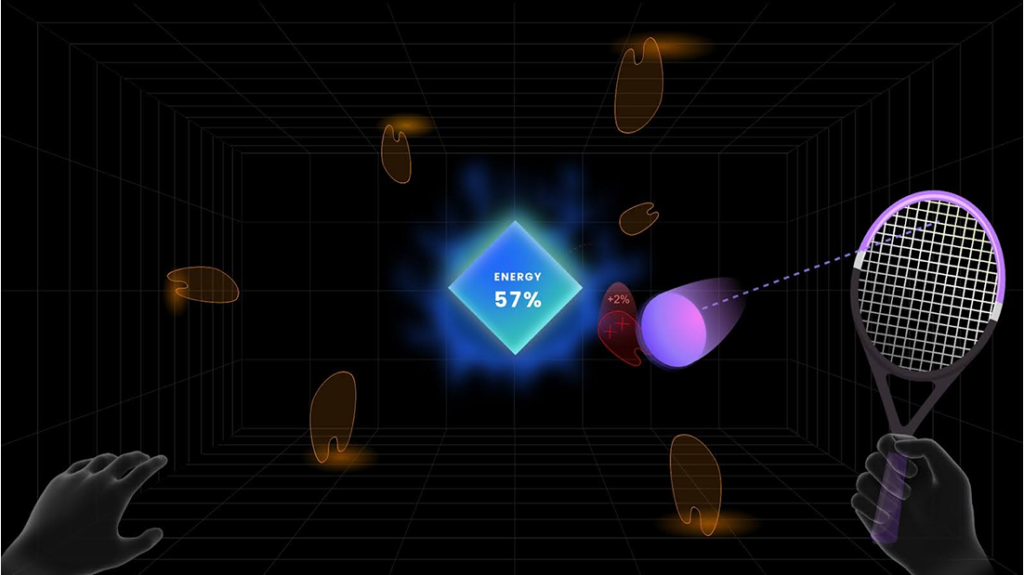
Figure 3, Core mechanism design draft.
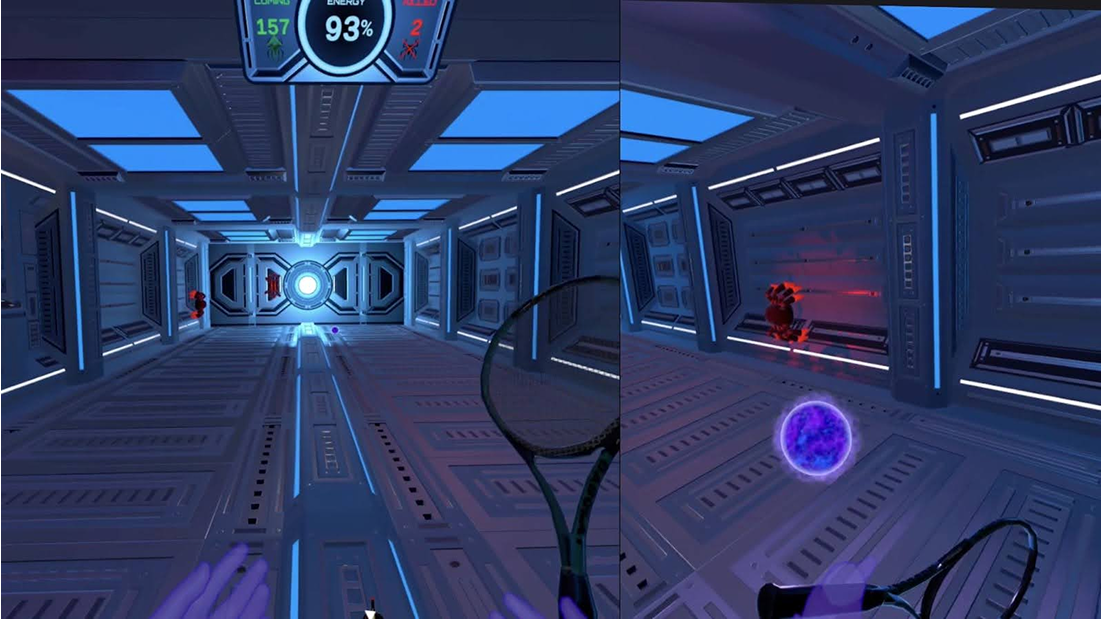
Figure 4, Core mechanism final effect.
These fundamental object interaction tasks streamline the VR interaction design process by deconstructing complex actions into their essential components. The next step is to examine how user input and system feedback can be effectively integrated into these basic object interaction tasks:
1. Upon entering the main gameplay scene, the racket is automatically attached to the player’s virtual right hand.
The virtual hand displays a grabbing pose, mirroring the player’s natural hand pose while holding the controller. This careful alignment between the predicted sensory outcomes of the user’s grab actions (from the efference copy) and the actual sensory results strengthens the Sense of Agency.
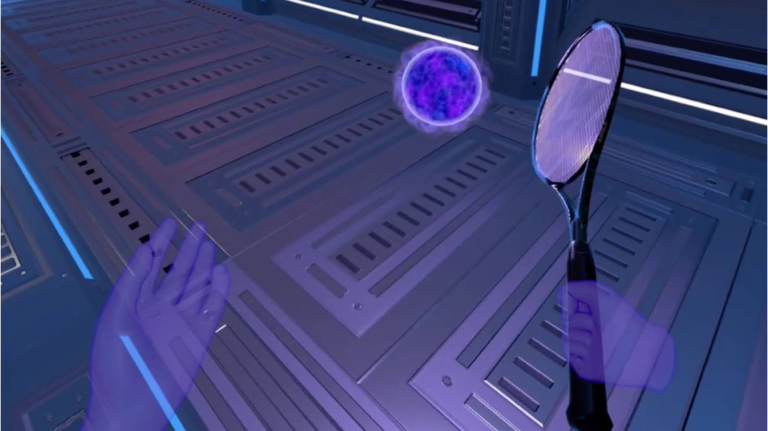
Figure 5, The initial racket and ball.
The Meta Quest Two controllers feature an ergonomic design, allowing users to hold them comfortably. As a result, when grabbing items, the controller imparts a sense of rigid constraint and a natural feeling of holding objects. This sensory correspondence between the biological body’s rigid constraint and the observed stimulation of the avatar’s body can be considered visuotactile feedback (Yi et al., 2019). This feedback provides the player with a strong SoE and enhances the Realism of the squash simulation.
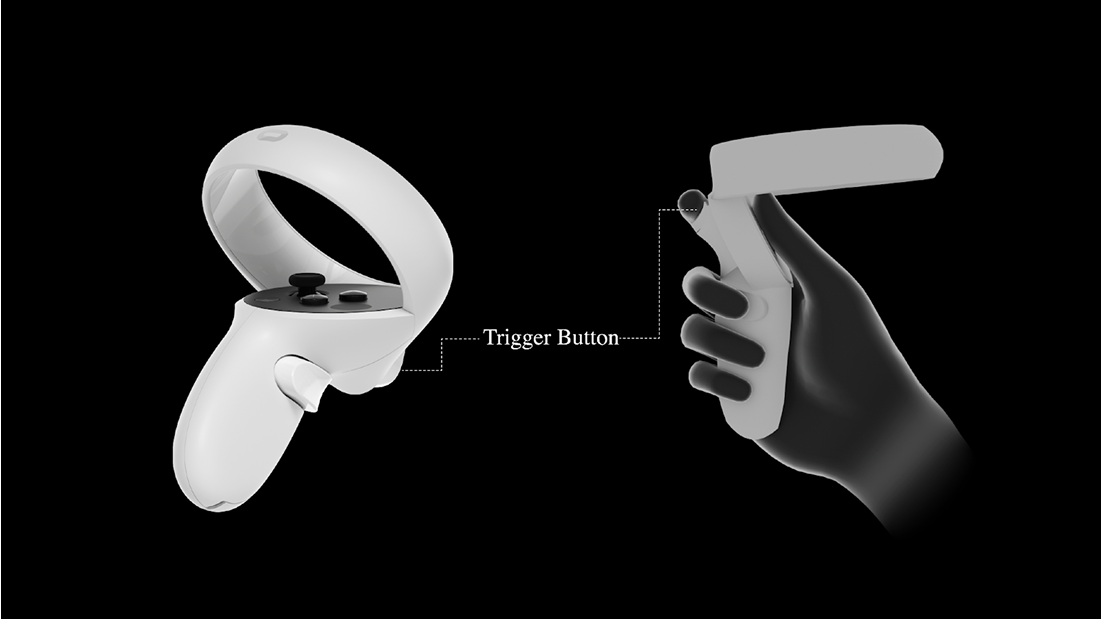
Figure 6, Meta Quest Two Touch Controller.
2. The ball is floating at a forehand hit position.
The floating ball approach addresses the challenge of reliably throwing objects with tracked controllers in a VE. In reality (for right-handed users), the left hand is responsible for grabbing and releasing the ball, allowing the right-hand racket to launch it. However, when performing a ‘throw’ action in VR, players may instinctively throw the controllers (Meta, 2021). To prevent this, the ball is designed to float at a neutral hit position at the beginning of the gameplay scene, eliminating the need for a ‘throw’ action.
This design decision also manages the game simulation’s complexity level, significantly reducing the intricacy of ball-launching and addressing the unnatural sensation experienced by users who cannot perceive and grasp the ball’s physical surface (although controllers can generate haptic feedback to simulate object collisions, they cannot replicate the tactile sensation of an object’s physical surface). Several studies have shown that discrepancies between the feedback of the action and the actual movement negatively affect the feeling of agency (Blakemore, 2002). By incorporating this design at the game’s outset, novice players may feel more confident to continue playing (Prensky, 2001) while eliminating interactions that could reduce the SoE.
3. The 3D model of the racket and the ball is designed to create a visually realistic representation.
The realistic shape of the ball and racket not only enhances the realism of the squash simulation but also provides clear affordances, reassuring users that they are performing the correct actions by mimicking real-world actions, such as swinging the racket to propel the ball towards enemies. This approach offers users an intuitive control method, ultimately strengthening the interactivity aspect of simulation cognition within the UX.
4. When the racket hits the ball, the controller vibrates, simulating impact, and the headset plays a ‘hit’ sound effect.
Various feedback mechanisms, including visual, vibration, and sound, are employed when the ball makes contact with the racket, enhancing synchronous visuotactile correlations. Specifically, the Sense of Agency and Body Ownership arises from this visuotactile correlation (Kilteni et al., 2012). In a VE, the ball hitting the racket coincides with the vibration feedback from the controller. Furthermore, when users interact with objects, the position of the perceived tactile stimulation aligns with their visual perspective, contributing to a Sense of Self-location (Preuss Mattsson et al., 2022). This optimises the Dynamic Systems and Realism aspects of the game simulation, effectively emulating the impact of striking a real ball (Adams & Rollings, 2007).
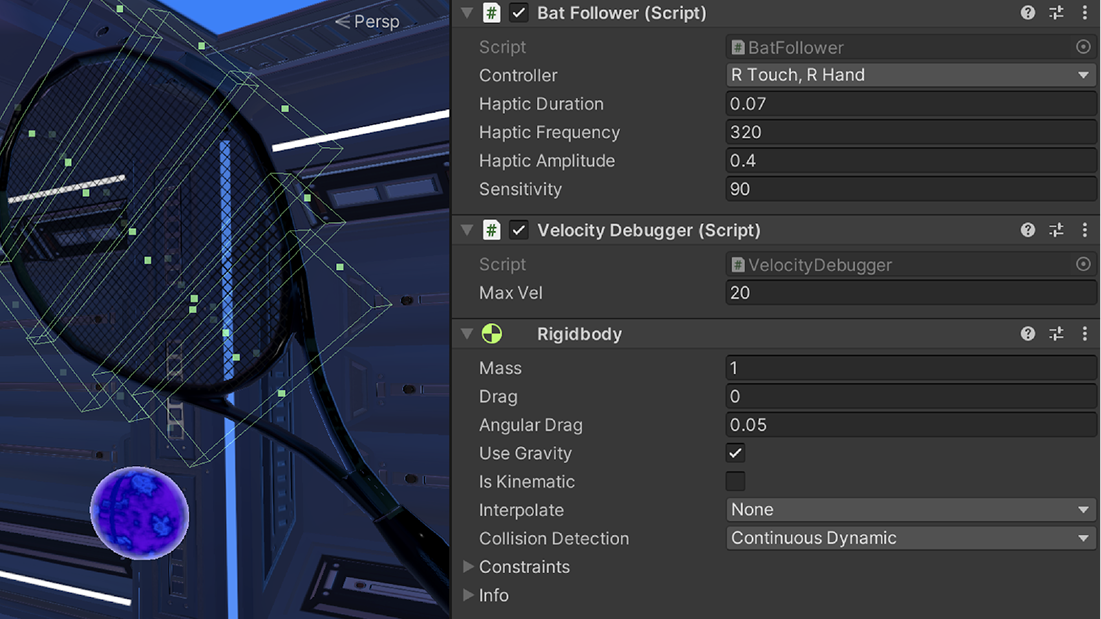
Figure 7, Implement Vibration (the racket hits the ball).
5. The physics simulation of the ball striking emulates real-world physics.
At the beginning of the gameplay, the ball’s mass is set to one, and the gravity parameters are adjusted to match Earth’s gravity. Simulation in gaming involves creating a VE that closely resembles real-world situations or systems. By replicating the complexities of reality, Space Squash aims to achieve Realism through a precise representation of physics mechanics (Juul, 2005) to ensure players can effectively hit targets and fully immerse themselves in the gameplay experience.
6. Ball Collison Audio.
The “BallCollisionAudio” script has been attached to the ball, which detects when the ball’s collider comes into contact with any other collider in the VE and provides audio feedback upon collision. The ball’s audio source consists of tennis ball hit sounds, creating realistic sensory correlations between the physical impact and the sound stimulation when the ball collides with a surface.
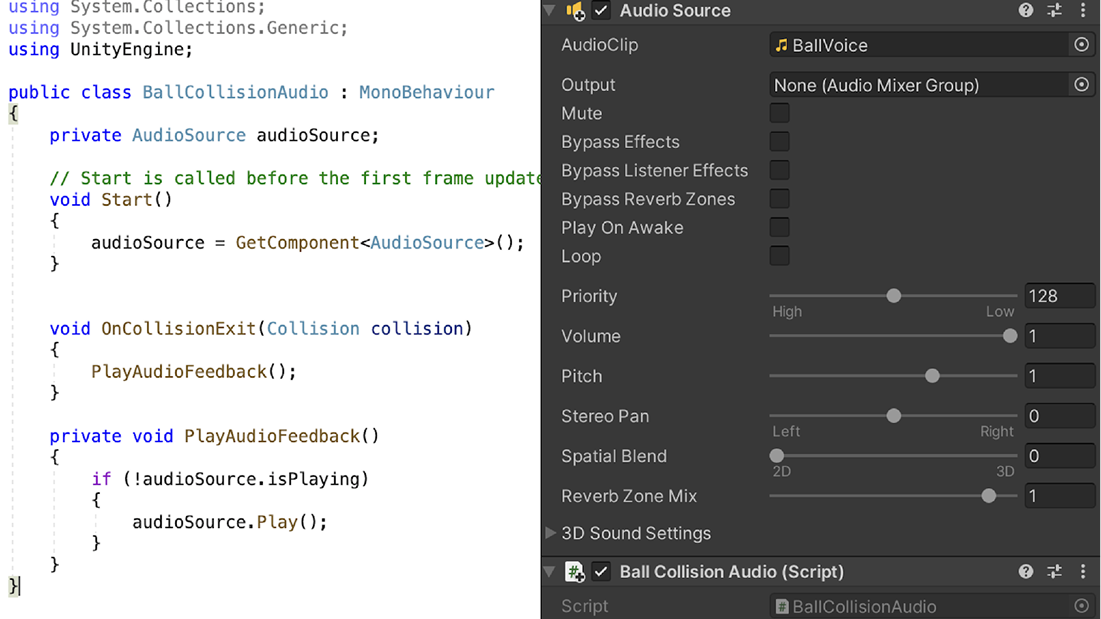
Figure 8, Implement ball collision audio.
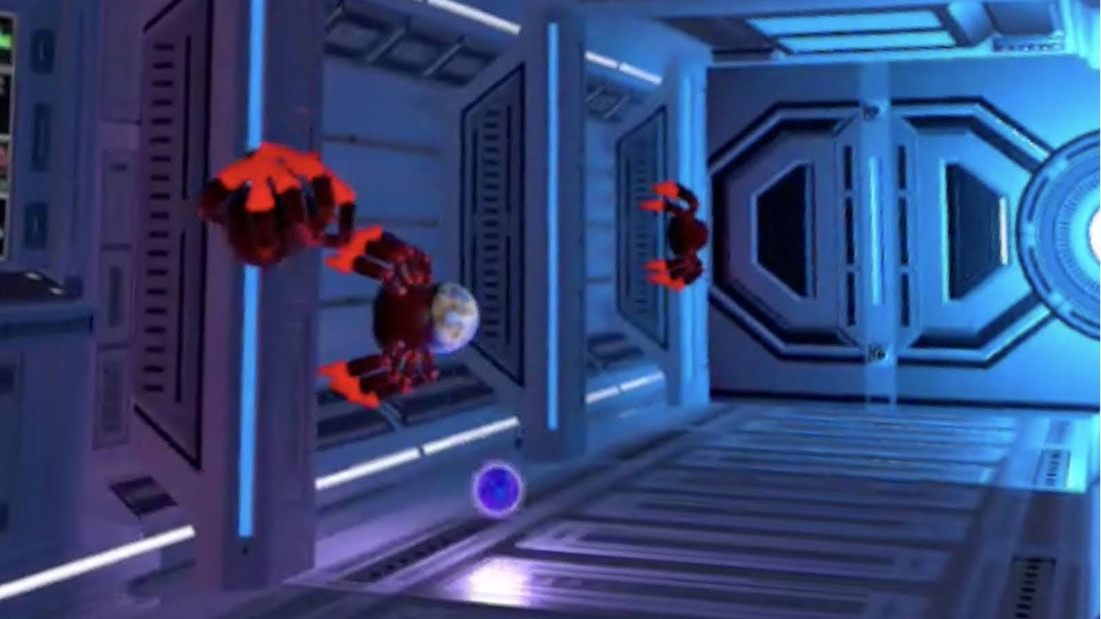
Figure 9, Enemy dying animation.
7. A pull-back mechanism is implemented for the ball; by pressing the trigger button on the right controller, players can cause the ball to return to its initial point at a constant speed.
The pull-back mechanism moderates the game’s complexity, making ball-catching more accessible for players. It addresses the discrepancy between virtual and physical spaces, enhancing both safety and interactivity. In the game, the VE simulates a spacious 62.4 square meter area that mirrors real squash court dimensions. However, players often have limited physical space at their disposal.
Without the pull-back mechanism, users would need to move around to catch the ball, potentially colliding with unseen real-world obstacles, thus raising safety concerns. The pull-back mechanism eliminates the need for extensive movement; by pressing the trigger button, the ball returns to its initial position, allowing players to catch it on the spot. This innovative feature bolsters the game’s interactivity, providing players with a broader range of interactive possibilities (Salen & Zimmerman, 2004). By removing real space limitations, it creates a safer and more seamless gameplay experience for users.
Conclusion
In conclusion, the design and implementation of “Space Squash” demonstrate the importance of incorporating clear affordances, intuitive controls, and a variety of feedback mechanisms to create a usable, equitable, enjoyable, and useful VR gaming experience. By considering the limitations of VR technology, this project has successfully addressed key aspects of simulation, UX, and SoE. Furthermore, the game offers users an opportunity to develop and refine their racket-ball skills in a safe and enjoyable VE, highlighting its potential as both a recreational and a training tool.
The insights gained from the development of “Space Squash” can be applied to future VR game designs, emphasising the significance of UX, hand-object interaction, and the balance between complexity and accessibility. Ultimately, this project showcases the potential of VR gaming to create memorable and enriching experiences that merge the boundaries between the virtual and real world, providing players with innovative and exciting forms of entertainment.